Tuesday, 20 July 2021

Story of Shree Vitthal-Rukmini...

Once upon a time, there was a follower of Lord Vishnu, named Pundalik. He was living with his wife and parents Janudev and Satyavati, in a forest called Dindirvan.

Pundalik was a devoted son but soon after his marriage, he began to ill-treat his parents. To escape from this misery, the parents decided to go on a pilgrimage to Kashi. When Pundalik’s wife learnt about this, she also decided to go. She and her husband joined the same group of pilgrims on horseback. While the son and his wife site on the horseback, his parents walked. Every evening when they camped for the night halt, the son forced his parents to look after horses and do other work.

The poor parents cursed the day they decided to go on a pilgrimage.

After travelling for some days, these people reached the ashrama of the great sage Kukkutswami and decided to spend a couple of nights. They were all tired and soon fell asleep except Pundalik who could not sleep.

In the evening, Pundalik saw a group of women dressed in dirty clothes enter the ashrama, clean the floor, fetch water and wash the Kukkutswami’s clothes. Then they entered the inner room of the ashrama and came out in beautifully clean clothes and passing near Pundalik, they vanished.

Next night he saw the same sight again. Pundalik threw himself at their feet and begged them to tell who they were. They said they were Ganga, Yamuna and other holy rivers of India in which the Pilgrims bathed and washed off sins. Their clothes became dirty by the sins of the bathing pilgrims. “And because of your ill-treatment of your parents,” they said, “You are the greatest sinner.”

This brought a complete change in Pundalik and he became the most devoted son. Now the parents’ rode the horses while the son and his wife walked by their side.

One day it so happened that Lord Krishna, while feeling lonely, was reminded of his early days in Mathura. He particularly remembered his sports with the cowherd boys and his love, Radha. Though she was dead, he longed to see her again. By his divine powers, he brought her back to life and seated her by her side. Just then his wife, Rukmini, entered the room. When Radha did not rise to pay her respect, Rukmini left Dwarka in anger and hide in Dindirvan forest.

Later, Lord Krishna set off in search of Rukmini with cowherd boys, after searching at Mathura, then to Gokul and Mount Govardhan, at last, they reached the banks of the river Bhima (now it is called as Chandrabhaga in Pandharpur). At last, he found her and managed to calm her. Krishna and Rukmini came to Pundalik’s ashrama.

But at that time Pundalik was busy taking care of his parents. Pundalik refused to pay his respect to the god before completing his duty towards his parents. However, he threw a brick for Lord Krishna to stand upon till he completes his duty with his parents. Impressed by Pundalik’s devotion to his parents, Lord Krishna did not mind the delay. Standing on the brick he waited for Pundalik.


When Pundalik came out and begged God’s pardon and requested Him to remain there for the devotees, Lord Krishna accepted it as he was pleased with Pundalik’s love for his parents.

Since then Lord Krishna is present as Vithoba, Vitthal or Pandurang who stood upon a brick in Pandharpur.

Ashadhi Ekadashi... A day to worship Lord Vishnu

 Ashadhi Ekadashi, also known as Devshayani Ekadashi, is one of the most important festival that is celebrated in Maharashtra. This festival is dedicated to Lord Vithoba (Avatar of Lord Vishnu). On this day, Lord Vishnu goes to sleep and wake up after four months on Prabodhini Ekadashi. It is the 11th lunar day of Hindu month of Ashadh which falls in June or July. This festival is generally celebrated in Pandharpur city in Maharashtra where a huge number of devotees gather to celebrate this ceremony. 

Lord Vithoba temple in Pandharpur
Mythology: 

It is believed that Lord Vishnu goes to sleep (Yognidra) in Ksheersagar (cosmic ocean of milk) on Shesh Naga and wakes up after four months on Prabodhini ekadashi that falls during Hindu Kartik month (October-November). This four months period is called as Chaturmaas. Chaturmaas is considered as a holy period of four months in Hindu calendar that starts from this day. Thus, Devshayani ekadashi is the beginning of the Chaturmaas.

Link for the story of Shri. Vitthal-Rakhumai

Shri Vithoba-Rakhumai 


Rituals: 

On this day, devotees keep fast for whole day to seek blessings from Lord Vishnu. Moreover, they spend entire night in singing devotional songs (Bhajans) and prayers. People draws beautiful Rangoli at the house entrance. 

During this day, devotees go walking in huge processions (Vari or dindi) to Pandharpur. People who join this procession is named as Vaarkari. Men are dressed in traditional attire like dhoti and kurta during the yatra. This yatra starts from Alandi (a small town in Maharashtra) and ends in Pandharpur. People from all over the state join this yatra and sing spiritual songs to pay tribute to Lord Vitthala. 

Vaarkari 


Sunday, 27 June 2021

वटपौर्णिमा व्रत... Worship of Banyan tree

Indian culture has been heavily influenced by Dharmik religions wherein all the traditions are related to the nature and the season. The culture binds us uniformly with nature. Living in harmony with Nature has been an integral part of Indian culture


Vatpurnima Vrat is one of the festival that is celebrated in India where married women worships the Banyan tree. Vat means Banyan tree and Purnima means Full moon hence the name. This ritual is performed in the morning by the married women for the long life of the husband. This festival is mostly celebrated in the states of Maharashtra, Goa, Gujarat and Bihar in India.

On this day,  married Women observe a fast for whole day and tie threads around a banyan tree and pray for the well-being of their husbands.

Mythology:

In Hinduism, a legendary couple Savitri and Satyavan are known for their love and devotion to each other. Princess Savitri is a daughter of king Ashvapati who rules the Madra kingdom. She was very beautiful, humble and virtuous girl. When she reaches the age of marriage, no man asks for her hand, so her father tells her to find a husband on her own. Later, Savitri chose a prince named Satyawan. 

Satyawan was the son of a blind king named Dhrimatsen of the Shalva kingdom. Defeated by the enemy, the king was living in the forest with his queen and son. 

Lord Narad knew that Satyavan's life was only one year thus, he advised Savitri not to marry him. But Savitri did not agree and she married to Satyavan. She came to the forest and started serving her in-laws with her husband. 

Three days before the foreseen death of Satyavan, Savitri takes a vow of fasting and vigil. While Satyavan is splitting wood, he suddenly becomes weak and lays his head in Savitri’s lap. Servants of Lord Yam (God of Death) come and return without the soul of Satyavan due to Savitri's holiness. Then, Lord Yam himself comes to claim the soul of Satyavan. Savitri follows Yama as he carries the soul away. She praises the obedience of Dharma and impressed Lord Yam by both her content and style. Later, Lord Yam granted life to Satyavan and blesses both of them to attain a long life.


Pooja Samagri:

Haldi-kumkum, Green bangles, black beaded thread, a long thread to tie around the tree, scent, Incense sticks, Diya, camphor, Panchamrut, puja cloth, betel leaves, supari (betel), Durva, Prashad of jaggary and coconut, any seasonal fruit (mango), photo of Savitri maata.


Puja Vidhi:

  • On the occasion of Vat Purnima, Women should get up early morning and perform all daily rituals, like bathing and regular prayers to God. Women should fast for the entire day. Usually, women wear a tradition attire (Saari) on this day.
  • After this, decorate pooja thali for the worship of banyan tree.
  • First of all, Woman should make a resolution that "May my husband and I live a healthy and long life".
  • Offer prayers to Lord Ganesha by establishing the betel nut on the betel leaves.
  • Place a photo of Maata Sati Savitri (if photo is not available one can establish betel nut as Maata Savitri) and worship it with haldi-kumkum, akshada, green bangles, black texture as auspicious ornaments and offer prayers to her.
  • Offer Prashad of jaggary and coconut, a mango.
  • Perform aarti.
  • Wrap a triple cotton rope around the Banyan tree and make seven rounds.
  • Chant following mantra while taking rounds
  • Fill Oti of five married women with mango and whole wheat after puja.
  • Read Savitri Katha in the evening at home by inviting few women at your place.


If it is not possible to worship the actual tree, one can take the image of the banyan tree or a branch of tree and perform pooja at home.

The festival celebrates Savitri’s loyalty and dedication for her husband and the women observing the fast hope to achieve similar qualities and wish for a better and longer life for their husbands.


Friday, 9 April 2021

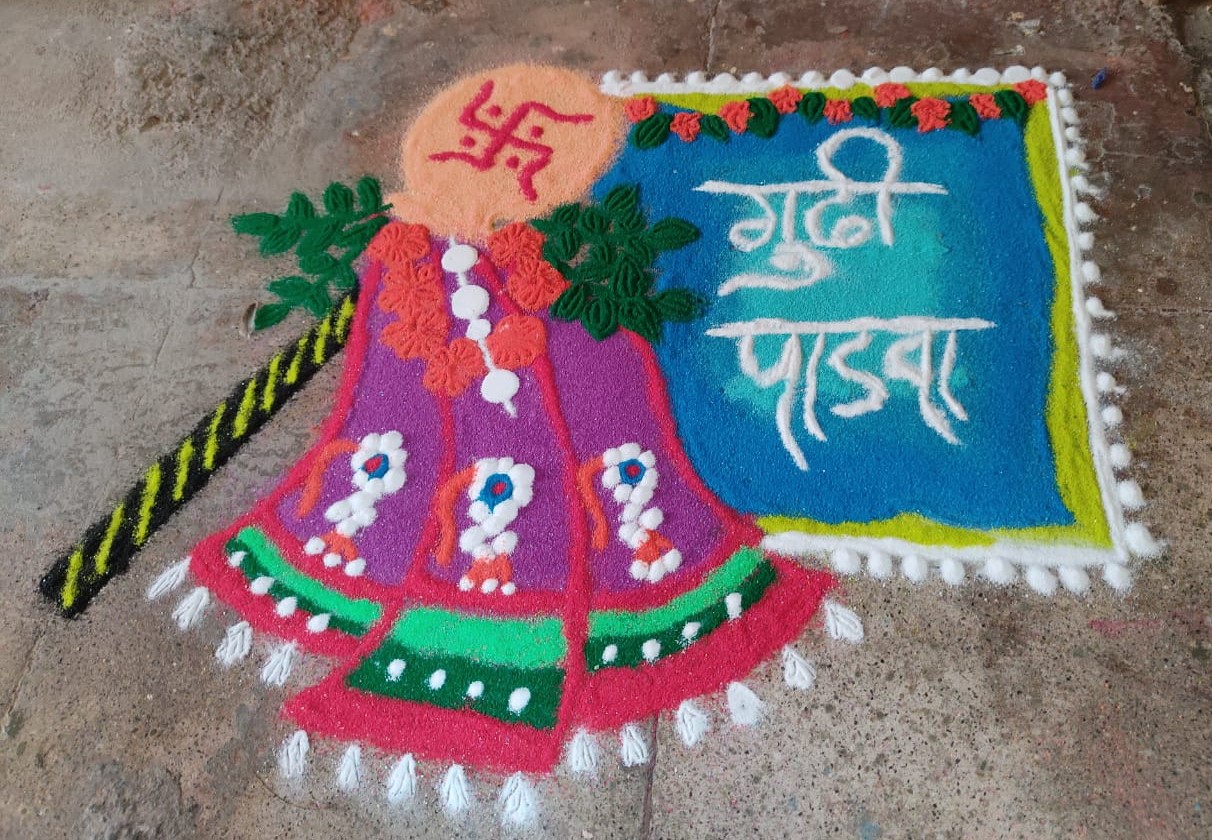
Gudi Padwa....सुरवात नवीन वर्षाची

    Gudi Padwa is celebrated on the first day of the Chaitra month of the Hindu calendar. It is the first day of the year for people of Maharashtra and Konkan region. Gudi Padwa gets it's name from two words, the word Gudi means a flag and Padwa is derived from a Sanskrit word Pratipad which refers to the first day of the bright phase of the moon. This festival is celebrated with family. People worship Lord Brahma and Goddess Saraswati on this day. 


Mythology:
    Gudi symbolizes Lord Rama's victory over Ravana and thus the happiness and celebrations that followed. Since a symbol of victory is always held high, so is the Gudi (flag). The festival commemorates the coronation of Rama post his return to Ayodhya after completing 14 years of exile. Gudi is said to be a symbol of victory.
    The festival is also linked to the mythical day on which Hindu God Bramha created the universe. It is also said that on this day Brahma introduced days, weeks, months and years. Thus Gudi is believed to ward off evil, invite prosperity and good luck into the house. 

Preparations for Gudi: 
  • Wooden pooja chowky
  • one big stick (Bamboo)
  • one saree or any cloth(red or green or yellow)
  • one whole coconut
  • Betel leaves
  • Batasha (a sweet made up of sugar)
  • Mango tree leaves
  • Kalash (tie a thread five times on the neck of it and draw KumkumSswastik on it) 
  • Flowers
  • Haldi, Kumkum, Akshada (rice)
  • Incense sticks
  • Diya 
  • Toran made up of Mango leaves and marigold flower garland
  • A bunch of Neem leaves
Gudi Pooja vidhi: 
  1. Clean houses and courtyards. 
  2. This Pooja vidhi is performed in the morning. 
  3. Draw beautiful Rangoli at the entrance of the house
  4. First perform a regular pooja of all the deities 
  5. The Gudi is made by tying a Saree on to a long bamboo stick. Take a Bamboo stick, clean it properly and apply five kumkum tikkas over it (on the top)
  6. On top of the cloth, neem leaves, Batasha mala or gathi (a Maharashtrian sweet preparation), a garland of red or yellow flowers and a twig with mango leaves are tied on the top of the bamboo stick. This stick with the various ornaments is topped off with an inverted silver or copper pot (Kalash).
  7. Put the Kalash on the top of the stick (as shown in image below). Apply kumkum Swastik on the kalash. 
  8. Now place the Chowky at the entrance and draw small Swastik below it. Decorate the chowky with flowers and also draw Rangoli around it.
  9. Cover the Chowky with any colored cloth and spread some rice on it (in the center of it). 
  10. Finally keep the Gudi on that rice (on chowky)
  11. Put two betel leaves (one top of the other) with one betel (Supari) on it. 
  12. Keep one coconut beside Gudi. Apply Haldi kumkum to it.
  13. Offer prayer to Lord Bramha and Goddess Saraswati.
  14. Gudi can be placed outside the window or in balcony also. 

Celebrations: 
    On this day, People dress up in traditional attire. All family members wear new cloths and put on jewellery as well. Women draws beautiful Rangoli at the entrance of the house. People consider this day an extremely auspicious for making new purchases, especially of gold and silver. 
    On this day, special food is prepared including a sweet dish, known as Shrikhand, which is eaten with a type of Indian bread known as Poori. Other special dishes include the sweet Indian flatbread, Aamras and Pooran Poli. 
    Another unique practice which forms part of the celebrations is the ingestion of neem leaves after Gudi pooja. These leaves can be eaten directly or ground into a paste or in the form of juice. This tradition has the importance of marking the beginning of the festivities. 
    It is believed that hoisting the Gudi outside ones home wards off any evil influences, making way for good luck and prosperity. 


Saturday, 27 March 2021

Holi.... festival of colors


Holi is one of the major festivals of India. It is the festival of colors. It is celebrated on the full moon day in the month of Phalgun as per the Hindu calendar. It generally corresponds to the month of March in the English Calendar. It is celebrated in South Asian countries, especially in India and Nepal.

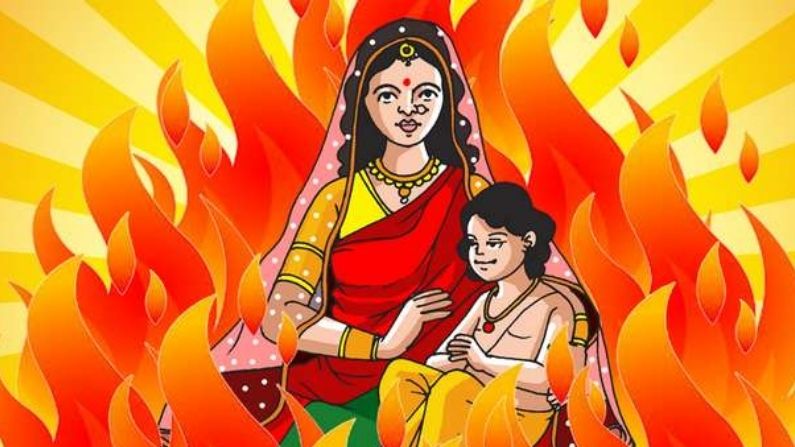
Picture Credit: TOI Holika Dahan, Udaipur

    The festival is celebrated for two days. First day is celebrated as Holika Dahan. Holi celebrates the killing of Holika in order to save Prahlad, a devotee of God Vishnu and thus Holi gets its name. On this day, a bonfire is lit which is referred to as Holika. It symbolizes the victory of good over evil. Second day is celebrated as Dhulivandan or Rang Panchami. On this day, bright colors and happiness soak each and every corner of the state in India and bring much joy to the lives of the people. In some regions of India, this festival is celebrated for five days.  

Mythology of Holi:

            Once there was a demon King Hiranyakashyapu. He had a son, Prahlad. Prahlad was the greatest devotee of Lord Vishnu. Hiranyakashipu insisted that only he be worshipped and would kill anyone who disobeys him. But his son continued to worship Lord Vishnu. This made him furious and he decided to kill his own son, so he called his sister, Holika. She had a magic robe. This robe had the power to save the wearer from burning in fire. Holika sat on a bonfire and tricked Prahlad to sit on her lap. As the fire roared, the magical garment covered Prahlad and he came out of the burning fire safely and Holika was burnt to death. Thus, this day is celebrated with colors to mark the victory of virtue and goodness over evil.


Holika Dahan vidhi:

    Holika Dahan is observed on Purnima Tithi in the month of Phalguna, Shukla Paksha. On the eve of Holi, typically after a sunset, people gather around a bonfire which they call Holika Dahan. The ritual symbolizes the victory of good over evil. Pooja is performed in different ways in different regions.


Pooja Samagri: 

Logs of wood, cow dung cake, Gangajal, coconut, a kalash full of water, Batasha or any other sweet, Thread, Diya, Kumkum, Turmeric, Akshada, Incense stick, Dhoop, Gulaal, Flowers. 

  • Clean the place with cow dung water or Gangajal where you want to perform Holika dahan.
  • Pile the logs of wood and cow dung cake in a pyramid shape.
  • Three, five or seven rounds of raw thread are tied around the Holika after which it is burnt.
  • Keep all pooja ingredients like Akshada, incense sticks, flowers, raw cotton thread, turmeric, batashagulal powder and coconut in a plate.
  • First seek the blessings of Lord Ganesha. After worshipping Lord Ganesha, you may proceed with Holika Dahan.
  • Perform pooja by offering water, haldi-kumkum, akshada, flowers to Holika. After that empty the water in kalash while taking rounds of Holika pile.
  • Perform the ritual by facing towards east or north direction.
  • Offer prayers to the Lord Narsimha.
  • End the prayers by circumambulating the bonfire thrice, five or seven times.


Next morning, on the day of Rang Panchami, the ash from the bonfire is collected and smeared on the body. Some people apply the ash on forehead. The ash is considered ash pious and it is believed that body is purified after applying it.

 Celebrations:

On the day of Holi, many sweet dishes are prepared at home like Puran poli, Shrikhand, Basundi etc. In Maharashtra, People prepare Puran poli as Naivedyam which they offer to Holika dahan in the evening and there is one saying in Marathi on this as, “Holi re holi Puranachi Poli”.

On the day of Holi, elder person in the house performs aarti to the children in the family and give them Batasha mala as a sweet and apply colors on their forehead.

    It is said that Lord Krishna started the trend of playing colors. He applied color on his beloved Radha to make her one like him. The trend soon gained popularity amongst the masses. No wonder, there is no match to the Holi of Mathura, Vrindavan and Barsana - the places associated with the birth and childhood of Radha and Krishna.

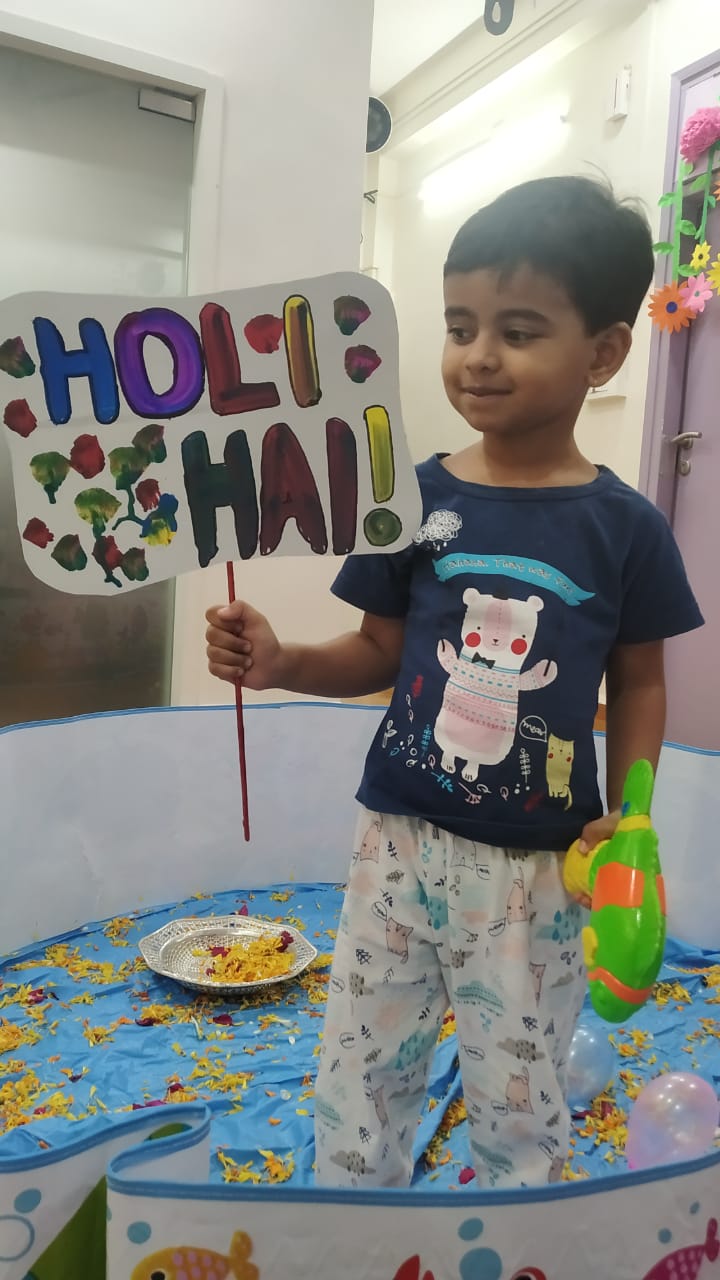
    People get to gather and often repair broken relationships on this day. People celebrate this festival by playing with colors. They throw colored powder and colored water on each other and enjoys this joyful festival.


Wednesday, 13 January 2021

Makar Sankranti... तिळगुळ घ्या गोड गोड बोला

    Makar Sankranti is one of the ancient festival in India. This festival is celebrated with joy and enthusiasm across all regions of India. It is a harvest festival in India because this festival is celebrated at the time of harvesting. This festival is celebrated in January every year. Most of the festivals in India are related to agriculture, Makar Sankranti is one of them. 


    In Maharashtra, On this day, People exchange til-gul laddoo (sweet made up of sesame seeds and jaggery) and multi coloured halwa (Sugar granules coated in sugar syrup). Married women invite friends/family members and celebrate Haldi-Kumkum. Guests are given til-gul and some small gift, as a part of the ritual. People draw beautiful rangolis at the house entrance. worship of 'Sugad' is important on this day. 'Sugad' is a clay pot filled with ripe grains. women in the family perform 'Sugad puja' on this day.

Sugad Puja vidhi:

Sugad Puja
  • First of all perform regular 'Devpuja' which you do everyday.
  • To perform Sugad Puja, Keep a wooden chowki adjacent to the temple and cover it with a red cloth. Draw a Swastik with red colored rangoli below chowki. Decorate chowki with toran (made up of mango tree leaves). 
  • Take five Sugad (It is a clay pot available easily in market) and clean it properly. Wrap a white thread (five rounds) around the neck of the Sugad. 
  • Apply Haldi kumkum to the Sugad from five sides.
  • Put all the ingredients like wheat grains, carrot, sugarcane pieces, groundnut, sesame seeds or laddoo, halwa (sugar granules), haldi kumkum  in all the five  Sugad. In some places, two Sugad are worshipped. 

  • Sprinkle some akshada (rice) on the chowky and place five sugad on the chowky.    
  • Place a two betel leaves and one puja supari on it. put it beside Sugad. we call it as "Maanacha Veeda" or "Veeda Supari". Offer haldi kumkum to it.
  • Place a diya (oil/ghee lamp) beside Sugad and lit it while performing puja.
  • Now worship five sugad by offering haldi kumkum to the Sugad and cover all the sugad with a red colored cloth of any lid or diya. Offer flower to each Sugad. It is said that all the Sugad should be covered to maintain prosperity in the house throughout the year. 
  • Show the offering of sesame laddoo and halwa after puja.
       In this way married women (Suvasini) perform this puja. This puja is performed in variations in Maharashtra. Married women can wear black Saree on this day. On this day, People draw beautiful rangoli in front of the house. 


    In the evening all married women invite each other at their house for haldi kumkum where they exchange small gifts (Vaan in Marathi) along with one flower and til-gul. This haldi kumkum program can be celebrated till Rath Saptami. But sugad is to be worshipped on the day of Makar Sankranti.  
    While exchanging til-gul as tokens of goodwill people greet each other with the words "तिळगुळ घ्या, आणि गोड-गोड बोला / til-gul ghyaa, aani goad-goad bolaa" meaning ‘Accept this til-gul (sweet) and utter sweet words’. The underlying thought in the exchange of til-gul is to forget the past ill-feelings and hostilities and resolve to speak sweetly and remain friends.

Sankranti Bornhan / Loot: 
   

    It is a fun filled Maharashtrian tradition to nurture child's immune system. This is a special ceremony organized for the kids in the age group of 1 to 5 years. 'Bor' means berries and 'Nhan' means bath.  It is celebrated for children's good health. It is believed that performing a Bornhan keeps  evil away from kids. 


  • To perform Bornhan, Child is dressed up in any traditional attire preferably in black color dress. 
  • Child have to wear jewelry made out of sugar candies which is named as "Halvyache Dagine" in Marathi. It is easily available in market during Sankranti season.  
  • Invite small children for this ritual.
  • The child is then sit on a Chowky or Paat (wooden rectangular stool). Five married women perform Aarti/Aukshan to the child.    

  • After this, let all other children sit around child. The mother of the child then shower berries, murmura (puffed rice), groundnut, chocolates and candies over the child and other children are asked to collect the fallen items. 


    In this way, this fun filled ritual is celebrated. Now a days people do variety of home decorations for this festivals. Celebration haldi kumkum and Bornhan are carried out on the same day. HAPPY MAKAR SANKRANTI..!!


Flavors of Makar Sankranti across India...

    Makar Sankranti is one of the major Hindu festival in India, dedicated to the Lord Sun (Surya devata). It is a major harvest festival of India which is also known as Maghi. It is considered to extremely auspicious, as it marks the transition of sun to sign of Capricorn or Makar rashi. It also marks as the end of the winter season and beginning of the spring. This festival is also known as \"Uttarayan\" because from this day sun begins it\"s northward journey. On this day, people thank the Lord Sun for a good harvest and offer the first grain to him. 
    This festival is celebrated in almost all parts of the India specially in Maharashtra, Goa, Andhra Pradesh, Karnataka, Kerala, Telangana, Punjab, Rajasthan, Assam and Jammu. There are variations of this festival across India.  

Celebration in different regions of the India:

Maharashtra: On this day, People exchange til-gul laaddoo (sweet made up of sesame seeds and jaggery) and multi coloured halwa (Sugar granules coated in sugar syrup). Married women invite friends/family members and celebrate Haldi-Kumkum. Guests are given til-gul and some small gift, as a part of the ritual. People draw beautiful rangolis at the house entrance. 


Tamil Nadu: This festival is known as "Pongal" in Tamil Nadu. The term Pongal in Tamil means "to boil". On this day, a special dish called \"Pongal\" is prepared and offered to Lord Sun in the morning. Pongal is prepared by boiling harvested rice with milk and jaggery in a clay pot.  


Punjab: In this state. this festival is known as "Lohri". Lohri is celebrated as a bonfire. The sugarcane harvest is celebrated in this festival. One this day, people gather and dance on the folk songs around a bonfire in the evening. 


Andhra Pradesh: It is known as "Pedda Panduga" in Andhra Pradesh. People celebrate this festival with prayer, new cloths and by inviting guests for feasts. The entrance of the house is decorated with \"muggu\" designs i.e. rangoli. 


Karnataka: It is one of the biggest festival in Karnataka. As per rituals, on this pious day, everyone wears new clothes visit and greet their loved ones and exchange a special foodstuff which is a mixture includes ellu (sesame seeds) mixed with groundnuts, coconut and jaggery and the mixture is known as “Ellu Bella” and the ritual is known as “Ellu Birodhu”. 


Gujarat, Rajasthan: In these states, People celebrate this festival by flying kites so it is also known as \"Festival of kites\". In Gujarat, this festival is also known as \"Uttarayan\".


Latest Post

Holi.... festival of colors

  Holi is one of the major festivals of India. It is the festival of colors. It is celebrated on the full moon day in the month of Phalgun ...