Showing posts with label Diwali Vibes. Show all posts

Monday, 16 November 2020

Diwali Vibes....Bhaiduj/Bhaubeej

     Bhaubeej ( Bhai Dooj ) is a festival celebrated by Hindus on the second lunar day of Shukla Paksha in the Hindu calendar of a  Kartik month. It is celebrated during the Diwali festival. It is a festival of brother and sister celebrated on the fifth day of Diwali. This festival represents the bond of love between brother and sister.
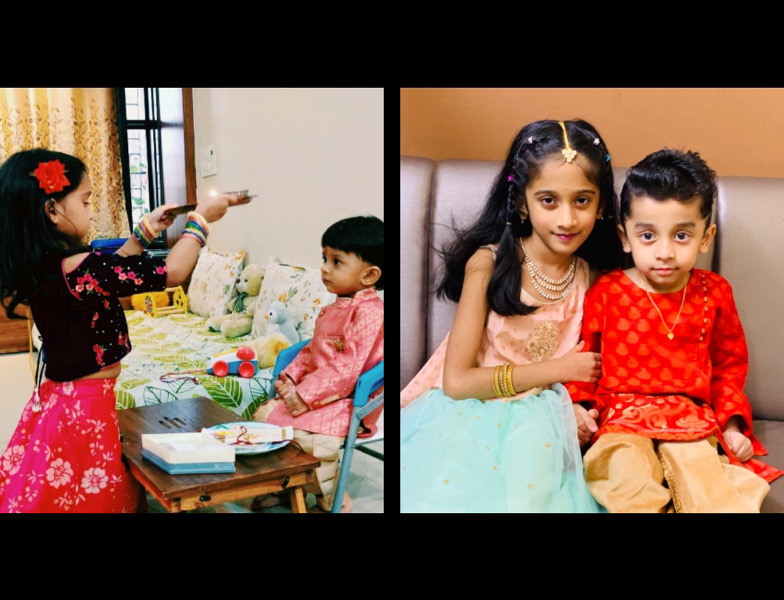
Bhaubeej: Bond of Love between brother-sister

    On this day, all women worships God Moon first and then to brother. Moon is considered as a first brother to every Woman. All married Women invites their brothers for a meal at their house. 

    After performing Aarti to the Moon, sisters perform aarti to a brother and offer them a whole coconut with a Kardoda (a red thread which a brother tie on their waist on next day) and a cloth ( a dress or a towel or a napkin or a blouse piece if brother is married)  and pray to the Lord for the welfare of their brothers. Brothers in return present gifts to sisters. For those who doesn’t have brother, performs a puja to the Moon. 

Saturday, 14 November 2020

Diwali Vibes- Lakshmi Pujan: 'Praying The goddess of Prosperity'

         Diwali is the biggest festival of Hindus. It is celebrated on Amavasya Tithi of Kartik month. On this day, Lord Ganesh and Goddess Lakshmi are worshipped for prosperity. Lakshmi Puja must be performed during Pradosh Kaal (sunset time). This festival is widely associated with Goddess Lakshmi. For Diwali, it’s important to clean up house and puja room. Because it is said that Goddess Lakshmi stays longer at clean, tidy and pleasing places. 

Mythology of Diwali:

    According to “Ramayana”, on this day, Lord Ram (Vishnu avatar) came back from 14 years of exile i.e. Vanwas with his wife Sita (Lakshmi avatar) and younger brother Lakshman after defeating Ravana. Therefore, people of Ayodhya decorated the streets and their homes with lamps to welcome Lord Ram. It was a New moon that day with full black night. Since that day Diwali is celebrated as a day of remembrance of that event. Thus Diwali is considered as a victory of light over darkness, knowledge over ignorance. 


Lakshmi Puja Vidhi:

  • On the day of Diwali, clean up house and puja room. This puja is performed in the evening (refer calendar for exact timing).  
  • Put on Toran (make it with mango tree leaves and marigold flowers) to the main entrance of the house in the morning. 
  • To perform Puja, Keep a wooden chowki adjacent to the temple and cover it with a red cloth. Draw a Swastik with red colored rangoli below chowki. Decorate chowki with toran (made up of mango tree leaves). 
  • Place Goddess Lakshmi and Lord Ganesh idol/photo on the chowki. 
  • In front of Idol/photo put five small clay Matkas (if not available use bowls) filled with pulses or grains and place Diya on it. It's the symbol of harvest and prosperity. 
  • Spread some rice on the chowki and place a copper/brass/silver kalash on it.  Fill water in a Kalash. Draw a Swastik on kalash. Put a coin, puja supari and a pinch of haldi, chandan and kumkum into it. Then cover the neck of the Kalash with five or seven Mango or betel leaves. Place a whole brown coconut with its husk on top of it. 
  • Beside kalash put a plate(you can use taaman) and draw a swastik on it with kumkum.  Then put rice in it and draw Goddess Lakshmi with that rice.  
  • Lit an oil/ghee lamp and place it on the rice. 
  • Begin Puja with Lord Ganesha.  All the offerings must be first made to Lord Ganesha. Gently place the idol on a plate(taaman) and perform snan (bath) of the lord with water and Panchamrut (mixture of milk, ghee, Gangajal, honey, curd). After performing the Abhishek, place it back on it's respective seat. While performing puja chant Ganesh mantra "Om Gan Ganapataye Namo Namah".  
  • After this, perform kalash puja and Lakshmi puja by offering haldi, kumkum, chandan, akshada and flowers(offfer red flower to Lakshmi if you have). In same sequence pray all deities in temple and welcome them. 
  • The old preserved coins, money and jewellery which is available in home is also place in a plate and offered haldi, kumkum, akshad and flowers.
  • Also worship the lamp by offering flowers, akshat, kumkuma, haldi and chandan.
  • A new broom is also worshiped as "Alakshmi", the sister of Goddess Lakshmi who wipes out all dirt, illness and worries from the house.
  • At last, offer Prasad and fruits to the deities.

Diwali Celebration:

In the lead-up to Diwali, celebrants will prepare by cleaning, renovating, and decorating their homes and workplaces. Main entrance of the house is decorated with marigold flowers and mango tree leaves. During Diwali, people wear their finest generally newly purchased clothes, illuminate the interior and exterior of their homes with diya and rangoli, light fireworks, and partake in family feasts, where mithai (sweets) and gifts are shared. Diwali is also a major cultural event for the Hindu and Jain diaspora from the Indian subcontinent.

    After the completion of Puja vidhi and rituals, people burst crackers and whole family enjoys firework followed by wholesome Dinner. Some people go to each other’s home to wish "Happy Diwali" and exchange sweets. People celebrate this festival with joy and happiness.


" Happy Diwali"

Thursday, 12 November 2020

Diwali Vibes....'Abyang Snan'

      Diwali is all about lanterns emitting lights from every house, giving and receiving of sweets and wishes, and enjoying the early morning bath known as "Abhyang snan".

    Abhyanga Snan is performed on Naraka Chaturdashi Tithi. It provides you with numerous health benefits. 

Procedure:

  • All family members wake up early in the morning
  • Women of the house apply Utane(A mixture of aromatic herbs and pulses) to all the members of the family from head to toe to cleanse and moisturise their body.
  • After massaging body, Women of the house perform aarti with diya made up of wheat flour and apply kumkum tikka.
  • Then take a regular bath with the use of any scented soaps. 
  • Wear new cloths after taking holy bath.

Materials required to make Utane at home:

  • Sesame seeds(make fine powder)
  • Amla powder
  • Gram floor (Besan)
  • Turmeric powder
  • Rose petal powder/ Rose water
  • Milk

    Combine all the ingredients together in a mixing bowl and add milk as per the need.

    Now a days readymade "Sugandhi Utane" is available in grocery store also.


    According to mythology, 
Narak Chaturdasi signifies the victory of good over evil. And thus, the early morning bath signifies the destruction of evil within us. It is also believed that since abhyang snan is taken before the sunrise, it is as sacred as bathing in the river Ganges.

"Happy and Healthy Diwali"

Diwali Vibes - Dhanteras

Dhanteras is celebrated on the first day of the five days long Diwali festival. There are several stories behind the celebration of the Dhanteras in Hindu mythology. On this day, people worship Goddess Lakshmi, Lord Yamraj, Lord Kuber and Lord Dhanvantri. Dhanteras is also referred as Yam Deepam.

    
    According to Hindu mythology, on this day, Goddess Lakshmi emerged from the ocean during Samudra Manthan with a pot full of Gold and Lord Kuber. It is believed that Goddess Lakshmi brings Lord Kuber to fulfil the wishes of the devotees. So, people worship Goddess Laksmi and Lord Kuber (God of wealth). Dhanteras is also known as Yamadeepan. It is believed that people worship Lord Yamraj (God of death) to please him and pray for the long life of the family. 


    Women of the house draws colorful Rangoli in front of the house and decorate house with Diyas and flowers. Hindus consider this day an extremely auspicious day for making new purchases, especially of gold and silver. 


Happy and Prosperous Dhanteras

Wednesday, 11 November 2020

Diwali Vibes- VasuBaras.. Beginning of Diwali

      Diwali being a major Hindu festival, it starts with the celebration of Vasubaras which is then followed by Dhanteras, Narak Chaturdashi, Laxmi Poojan, Padwa or Balipratipada and, lastly, Bhai Dooj / Bhau Beej.


  On the day of Vasubaras, people worship cows and calves in the evening. The word “Vasu” means cow, and “Baras” means the twelfth day, hence the name Vasu Baras.

According to mythology, during the great event of Samudra Manthan—the churning of the ocean by Gods and Demons to obtain Amrut (the nectar of immortality)—a divine cow named Kamdhenu emerged from the ocean. She was considered a heavenly gift to the seven great Gods. Kamdhenu symbolizes motherhood, divinity, and nourishment, and is also closely connected to Lord Krishna.

On Vasubaras, people honor the cow as a motherly figure who provides sustenance to all, and they celebrate the day with devotion, gratitude, joy, and happiness.

" Happy Diwali" 


Latest Post

Holi.... festival of colors

  Holi is one of the major festivals of India. It is the festival of colors. It is celebrated on the full moon day in the month of Phalgun ...